
 Zane Michalle
Students across England have protested a particularly difficult A-level maths exam, launching a Change org petition and drawing official scrutiny. In less than 24 hours after the Wednesday 3 June 2026 exam, over 15,000 people had signed the petition, prompting Ofqual to confirm it was “closely monitoring” the marking process.
Below, we report the timeline of events, petition demands, official responses, and wider context of exam difficulty and grade trends, with perspectives from students, educators and regulators.
Timeline of Events
- Wed 3 June 2026: Thousands of students sat the Pearson Edexcel A‑level Mathematics (Paper 1 – Pure Mathematics 1) exam. (This was a 2‑hour paper in the afternoon session.)
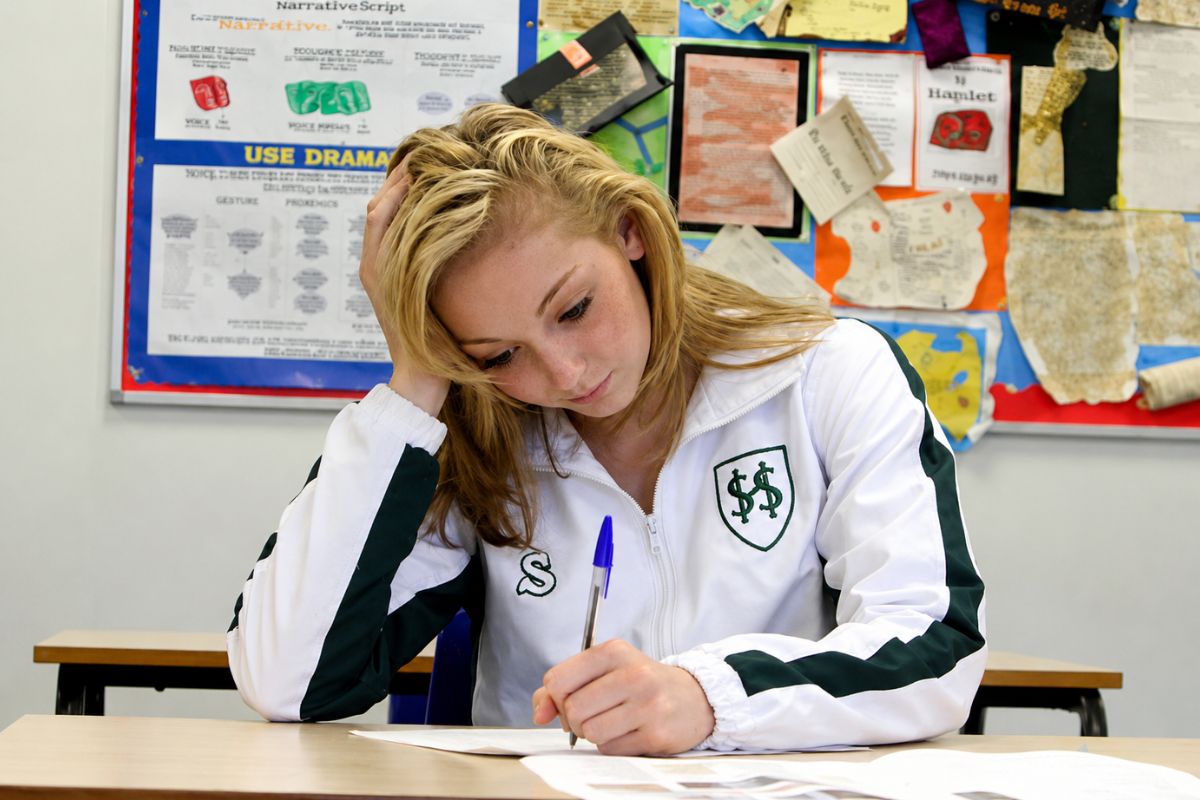
Students take an A-level exam in a hall (representative image). - Wed 3 June: Immediately afterwards, worried students launched a Change.org petition, “Demand a fair review of A level Mathematics Edexcel 2026 paper 1.” By next day, it had gathered thousands of signatures.
- Thu 4 June: Media outlets report widespread concern. The Telegraph noted 13,000+ signatures and described the paper as “exceptionally hard.” The independent press reported over 15,000 signatures in under 24 hours, citing students left “overwhelmed” and “uncertain”.
- Ofqual (exam regulator) told the Press Association it was aware of the concerns and was “closely monitoring” Edexcel’s marking to ensure grades remained a reliable indication of knowledge.
- Fri 5 June: The petition continued to grow, nearing 20,000 signatures (19,449 as of publishing). Edexcel and Ofqual remained in focus, and students and teachers debated the fairness of the paper.
Read More: Psychological Impact of Cheating in Proctored Exams
Petition Demands and Wording
The Change org petition was drafted by students, teachers and parents, and it explicitly calls on Pearson Edexcel (the exam board) to review the paper’s difficulty and adjust grade boundaries if needed. Key excerpts include:
“We, the students, respectfully request that Pearson Edexcel conduct a thorough review of A Level Mathematics Paper 1 (2026) and carefully consider the impact that the paper’s difficulty may have had on student outcomes”.
Signatories argue the paper had a “significant increase in difficulty” versus past years, requiring “multiple layers of reasoning, extended algebraic manipulation, and unfamiliar approaches” beyond expectations. They report many strong students left the exam “uncertain and overwhelmed,” struggling to complete sections in time.
The petition explicitly states it is not asking for mark inflation, but rather for fairness and consistency: grade boundaries should fully reflect any extra challenge and ensure students’ grades reflect true ability. In its own words, “These students deserve confidence that their grades will reflect their mathematical ability rather than the unusual difficulty of a single examination paper.”
Official Responsesexam
Pearson Edexcel (Exam Board) – Spokespeople emphasized the standard procedures for exam setting and grading. Pearson’s senior examiner, Caroline Darrington, said every exam is “rigorously checked” by experienced examiners, and if a paper is found to be harder, the grade boundaries will be set to reflect that. In particular, she noted:
“If a paper is found to be more difficult than previous years, grade boundaries will be set to reflect that… This process ensures students receive results that fairly reflect their performance and are comparable across exam series.”.
Edexcel thus maintains that students will not be unfairly penalized: marking will follow a normal review process using statistical data and expert judgment. (Pearson also pointed out that different versions of papers sometimes exist, but all candidates received the correct intended paper.)
Ofqual (Regulator) – Ofqual confirmed it was “closely monitoring” the awarding process for the paper in question. A spokesperson said the regulator’s priority is students and ensuring grades remain a reliable indicator of knowledge. Ofqual’s vigilance was echoed in press statements: it said once results are released, it will check whether any breaches of rules occurred and whether awarding needs adjustment.
Other Boards (AQA, OCR, WJEC) – No statements were issued by other exam boards, since this paper was Edexcel’s. However, exam boards typically coordinate through Ofqual, and any adjustments (if needed) would follow the same policy of comparable outcomes. (For context, Pearson’s 2025 post-exam updates explained how multiple versions of a Maths exam were handled to ensure fairness, though that was a different issue.)
Read More: How to Write a Perfect Term Paper & A Guide for UK Students
Student and Teacher Reactions
Students reacted on social media and in the petition comments. Many described the paper as far harder than expected, comparing it to “torture” or “a war crime” (per news reports). In one online poll by a popular math educator, 54% voted that the exam was “worse than expected, bad/awful”. Petition signers said even high-achieving students “could not complete substantial sections” under time pressure.
Some teachers and tutors backed the petition, noting unfamiliar question styles. One mathematics instructor told the BBC the paper included content “well outside” the standard format, hurting weaker candidates. However, others argued the uproar was overblown.
For example, one educator commented online that there was “no issue with the exam – just the students who haven’t spent enough time revising.” (Such views went unquoted in major press, but they reflect a segment of opinion that attributes difficulty to lack of preparation.)
Overall, reactions fell into two camps: students (and many teachers) said the paper was exceptionally hard and demoralizing, while others said rigorous exams are normal and invoked personal responsibility.
The dispute highlights tensions over exam difficulty, preparation, and well-being. (Students’ emotional toll was noted in media: one report said many were in tears or left anxious and “uncertain” after the paper.)
A-Level Maths Difficulty and Grade Trends
A-Level Mathematics is widely seen as one of the most challenging subjects. In recent years, examiners and teachers have noted rising grade thresholds. For example, analysis of AQA A‑Level Maths (a comparable qualification) shows the mark needed for an A grade jumped from 171/300 (57%) in 2022 to 222/300 (74%) in 2024.
(In other words, students now need many more correct answers to secure top grades.) Teachers attribute this partly to post-Covid adjustments: grade boundaries were initially lowered in 2020–21 but have since climbed steadily.
Exam boards like Edexcel publish their own year-to-year comparisons and claim to maintain comparable standards, but students feel this year’s paper broke the usual pattern of difficulty. (Indeed, Edexcel had announced a policy to make papers “more accessible” after 2019, so this unexpected jump upset expectations.)
In any case, Ofqual’s role is to set outcomes so that overall grading is “fair and comparable across exam series” – a point Pearson reiterated. The petition invokes this “principle of comparable outcomes,” arguing that if one paper is out of line, students should not suffer relative to peers in other years.




GIPHY App Key not set. Please check settings